For most return-to-base fleets, fleet depot EV charging works best when sized around dwell time rather than peak kilowatt ratings. Vans, service vehicles and municipal cars that sit in a yard for 8 to 12 hours overnight can take their full daily energy from networked AC Level 2 wallboxes, while a small pool of shared DC chargers covers midday turnarounds and late arrivals. This guide walks through the five-step maths for sizing AC and DC hardware, managing transformer limits and selecting depot-ready equipment.
Why overnight dwell time beats raw kilowatt ratings
A common mistake in early fleet electrification is buying high-power DC chargers for vehicles that park all night. Fast hardware costs more to buy, costs more to install and creates steep evening power spikes when every driver plugs in at the end of a shift.
The US Department of Energy’s Alternative Fuels Data Center (AFDC) notes that most fleet charging begins at dedicated depot facilities where vehicles return nightly, and that Level 2 equipment handles the majority of long-dwell applications while DC fast charging serves short turnaround windows and multi-shift routes. According to the IEA Global EV Outlook 2025, home, workplace and depot AC charging continues to supply the bulk of electric vehicle energy worldwide because it matches how vehicles are actually parked.
| Depot charging approach | Typical power per port | Best port-to-vehicle ratio | Best for | Grid & capex impact |
|---|---|---|---|---|
| Overnight AC Level 2 | 7–22 kW (EU) · 9.6–19.2 kW / 40–80 A (NA) | 1:1 (one port per bay) or 1:2 on dual-port pedestals | Single-shift vans, service trucks and company cars parked 8–12 hours | Lowest hardware and installation cost; steady overnight load |
| Mid-power DC top-up | 20–40 kW DC | 1:4 to 1:8 (shared bay) | Two-shift operations, 1–3 hour midday loading windows, larger box trucks | Moderate grid draw; avoids heavy switchgear upgrades |
| High-power DC turnaround | 60–240 kW DC | 1:8 to 1:15 (dedicated fast lane) | 24/7 dispatch, <45-minute route turnarounds, heavy-duty vehicles | High peak demand; often requires transformer upgrade or smart throttling |
The 5-step fleet depot EV charging sizing formula
Before looking at charger datasheets, work backward from your route schedule. Every depot is different, so build your sizing sheet around energy delivered rather than battery capacity alone.
Step 1: Calculate worst-case daily energy per vehicle
Never size a depot around mild spring weather. Cold mornings, cabin heating, refrigeration units and full payloads increase consumption by 20% to 35%.
Daily energy needed (kWh) = Daily route distance × Baseline consumption × 1.25 weather and payload margin
Example (assumptions, not a forecast): A delivery van drives 180 km (112 miles) per day and uses 0.28 kWh/km in mild conditions (50.4 kWh). Adding a 25% winter margin brings the daily replenishment target to 63 kWh per van.
Step 2: Find your net usable charging window
A vehicle that arrives at 19:00 and leaves at 06:00 is parked for 11 hours, but it will not charge at full power for 11 hours. Subtract at least 1 to 1.5 hours for driver plug-in delays, departure cabin pre-conditioning and the slower taper phase above 80% state of charge.
Usable charging window (hours) = Scheduled parked time − 1.5 hours buffer
In our example, an 11-hour overnight stay leaves 9.5 usable charging hours.
Step 3: Calculate minimum kW per port
Around 8% to 10% of AC energy is lost in the vehicle’s onboard charger and cable heating. Divide your daily energy target by the usable window and a 0.90 efficiency factor:
Required port power (kW) = Daily energy needed ÷ (Usable charging window × 0.90)
For our 63 kWh van with 9.5 usable hours: 63 ÷ (9.5 × 0.90) = 7.37 kW. An 11 kW three-phase wallbox in Europe or a 40 A (9.6 kW) Level 2 wallbox in North America comfortably refills the van with two hours to spare.
| Vehicle type | Example daily energy (with winter margin) | Usable overnight window | Minimum continuous power needed | Recommended charger class |
|---|---|---|---|---|
| Service car or small van | 35 kWh | 9 hours | 4.3 kW | 7 kW (EU) · 40 A / 9.6 kW (NA) AC wallbox |
| Parcel delivery van | 65 kWh | 9.5 hours | 7.6 kW | 11 kW (EU) · 48 A / 11.5 kW (NA) AC wallbox |
| High-mileage box van | 110 kWh | 9 hours | 13.6 kW | 22 kW (EU, if onboard charger supports 22 kW) · 80 A / 19.2 kW (NA) AC, or 20–30 kW compact DC |
| Double-shift van (midday top-up) | 50 kWh needed in 2 hours | 1.75 hours usable | 31.7 kW | 30–40 kW DC fast charger |
Step 4: Check the vehicle’s onboard AC charger limit
An AC wallbox never feeds the battery directly; it feeds the vehicle’s onboard charger (OBC). If a European cargo van has an 11 kW onboard charger, connecting it to a 22 kW AC port will still deliver only 11 kW. When a vehicle has a large battery (100+ kWh), a short overnight window and an 11 kW OBC cap, 20–30 kW compact DC bypasses the onboard charger and feeds the battery directly without jumping to a 150 kW cabinet.
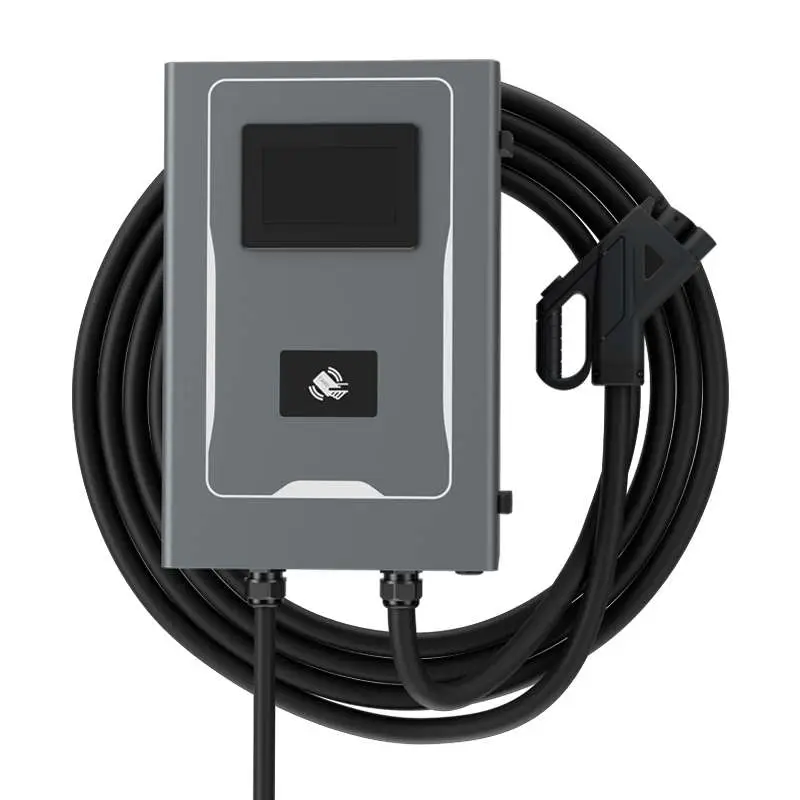
Even in an overnight depot, routes run late, drivers forget to plug in and peak season adds second shifts. Most fleet operators pair their 1:1 overnight AC bays with one 20–40 kW or 60–120 kW DC port for every 8 to 12 vehicles near the dispatch gate for emergency top-ups and midday turnarounds.
How to fit 20+ fleet chargers onto an existing building supply
Hardware is rarely the bottleneck at a depot; the building transformer is. If 20 vans return at 18:00 and plug into unmanaged 11 kW wallboxes at the same time, instantaneous demand jumps by 220 kW while warehouse lighting, sorting belts or HVAC are still running.
Yet those 20 vans, each needing 63 kWh over 9.5 hours, require only 1,260 kWh in total—an average load of about 133 kW across the night.
| Scenario (20 delivery vans, 63 kWh each, 9.5 h window) | Unmanaged charging | OCPP smart charging / load management |
|---|---|---|
| Peak power drawn at 18:00 | 220 kW (20 × 11 kW) | Capped at 140 kW (or lower as building load drops) |
| Vans at 100% by 06:00 | 20 of 20 (finish around 00:30, then sit idle) | 20 of 20 (finish by 05:30, using the full window) |
| Grid upgrade required? | Often yes | Usually avoided |
| Utility demand charges | High evening peak tariff | Flattened into off-peak night hours |
Using an OCPP-connected management platform or CT-based dynamic load balancing, you can cap the total current drawn by the charging group and shift kilowatt-hours into cheaper midnight tariff bands. In the European Union, smart recharging is also a regulatory requirement under Article 14 of the revised Energy Performance of Buildings Directive (EU) 2024/1275 for non-residential buildings installing new commercial recharging points.
What to look for in depot hardware (beyond kW)
A public retail car park and a working logistics yard put very different stresses on equipment. When specifying chargers for overnight fleet charging, check four operational details:
- Driver identification and cost allocation. In a depot, drivers want to plug in and walk away in seconds. RFID/NFC cards (assigned per vehicle or per driver) or ISO 15118 Plug & Charge log every kilowatt-hour to a specific vehicle or cost centre without requiring a smartphone app.
- Mechanical and weather protection. Vans and pallet trucks operate in close quarters. Look for IK10 impact ratings and IP54 to IP65 weather sealing, with an operating temperature range of −30 °C to +50 °C for outdoor yards.
- Standby efficiency. Depot chargers sit plugged into the mains 24 hours a day. According to the US EPA, EV chargers spend roughly 85% of their time in standby, and ENERGY STAR certified models cut standby consumption by 40% compared with standard units.
- Open protocol support. Choose chargers that run OCPP 1.6J or OCPP 2.0.1 so your depot can integrate with fleet telematics and energy management software from any vendor. For a detailed comparison of protocol versions, see our OCPP 1.6J vs 2.0.1 buyer’s guide.
Matching MAXGREEN chargers to fleet depot roles
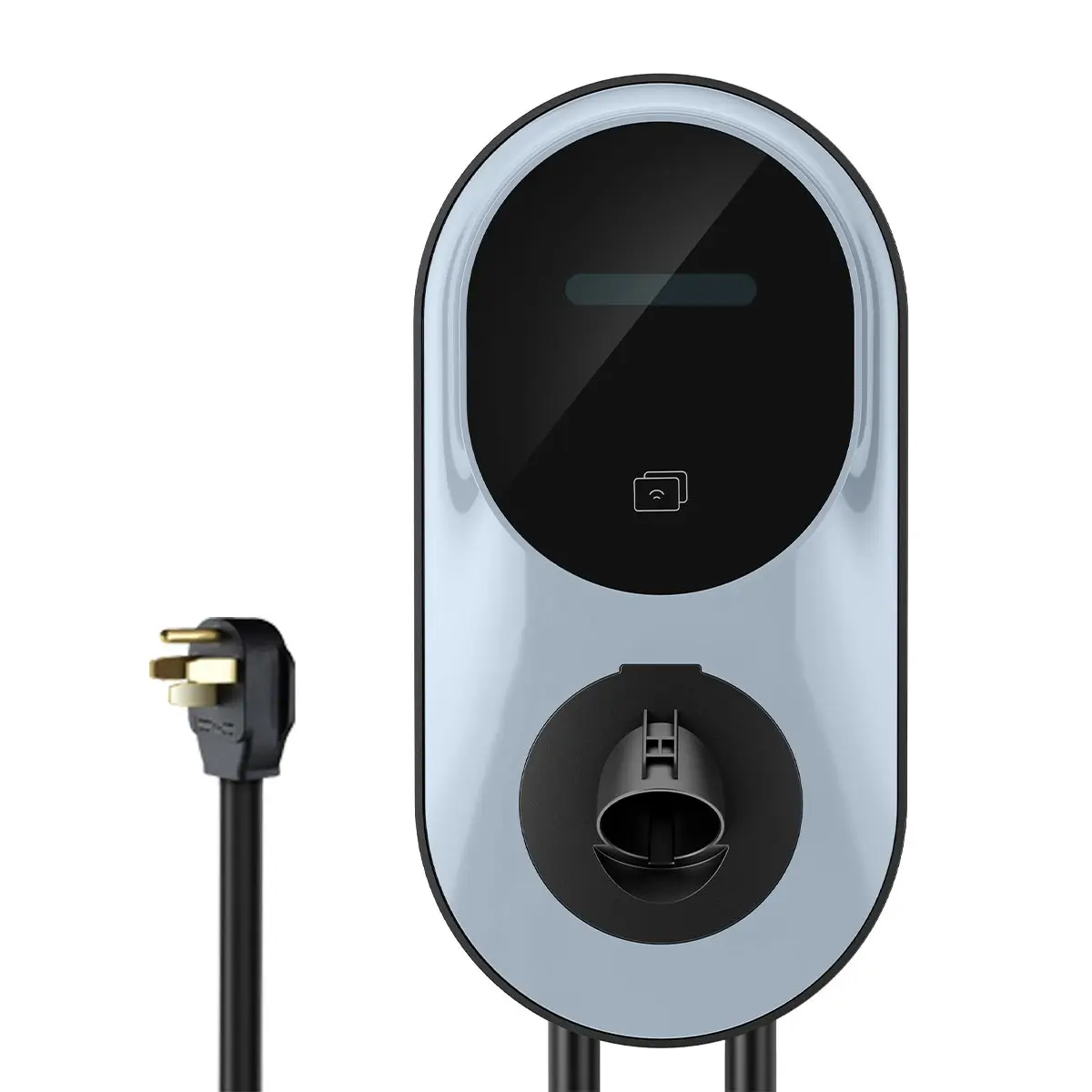
MAXGREEN builds both AC vs DC fleet charging hardware in our ISO 9001 factory, allowing fleet operators and EPC installers to source overnight bays and fast-turnaround bays from one product range:
| Depot role | Recommended MAXGREEN model | Key specifications | Market & compliance notes |
|---|---|---|---|
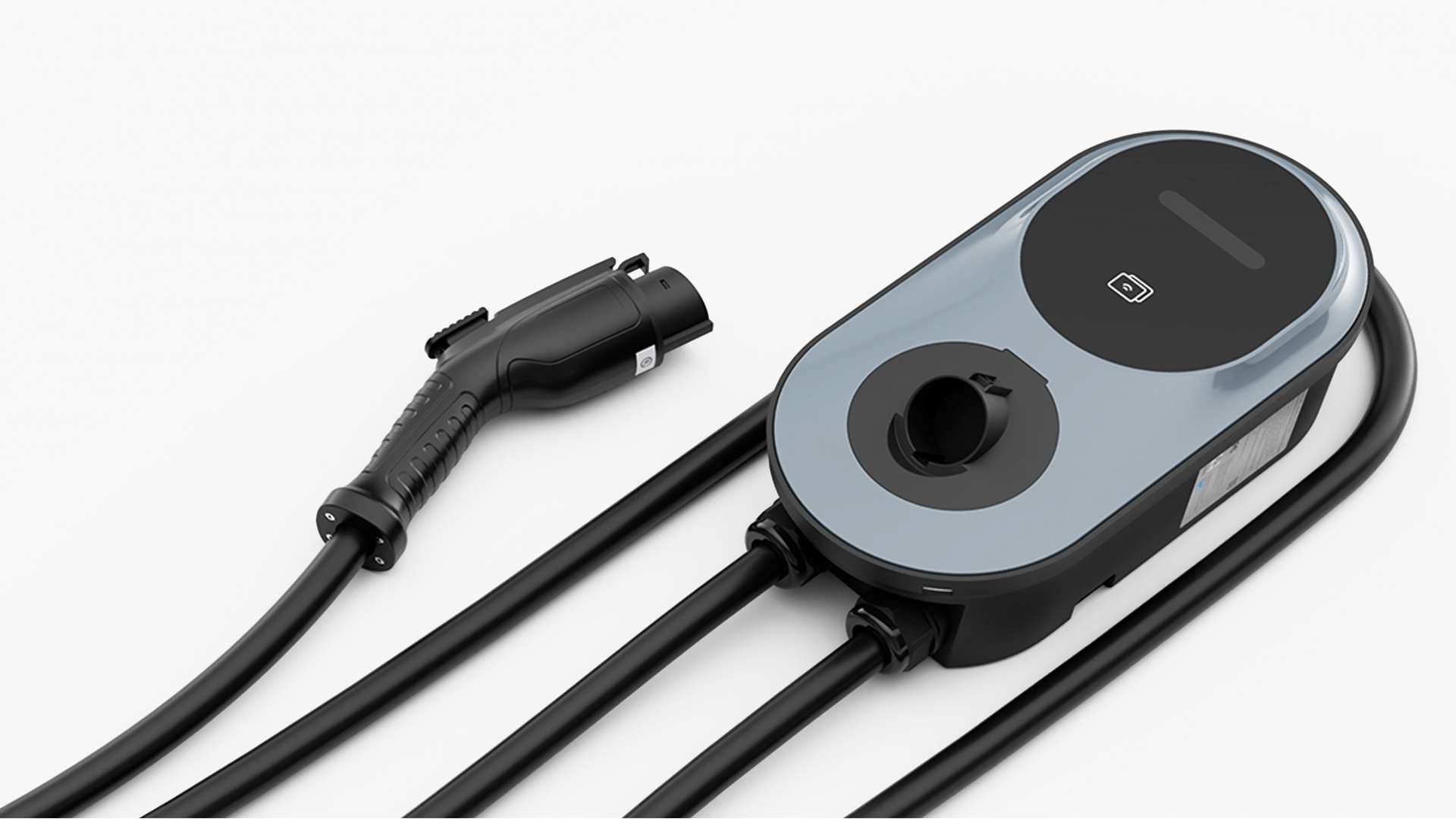
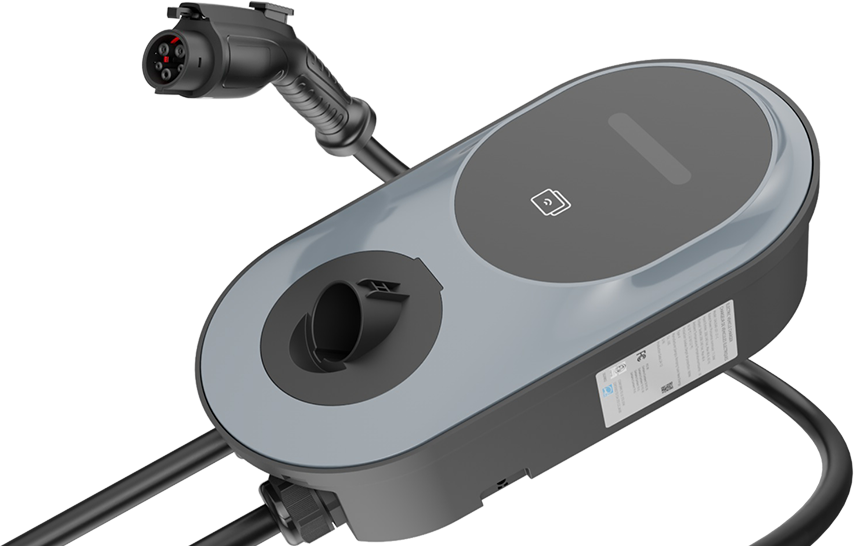
| 1:1 overnight wallbox (EU & NA) | MG-L01 smart wallbox | EU: 7 / 11 / 22 kW (Type 2) · NA: 40 / 48 / 80 A, 9.6–19.2 kW (SAE J1772); NFC card reader; OCPP 1.6J & 2.0.1 OTA | NA version is cETLus Listed (UL 2594 / CSA C22.2 No. 280, control no. 5035409) and ENERGY STAR certified (control no. 5036412). EU documentation on request |
| Heavy-duty NA commercial wallbox | MG-A09 in our smart AC wallbox range | 32–80 A (7.6–19.2 kW, SAE J1772); IP65 & IK10; OCPP 1.6J & 2.0.1 OTA; ISO 15118 Plug & Charge option | cETLus Listed, ENERGY STAR and FCC certified for North America |
| Shared overnight bays (2 vans per post) | MG-L02 dual-port pedestal | 22 + 22 kW (Type 2 × 2); CT dynamic load balancing; 7-inch screen; OCPP 1.6J; ISO 15118 | Cuts trenching and mounting points in half on open parking aprons |
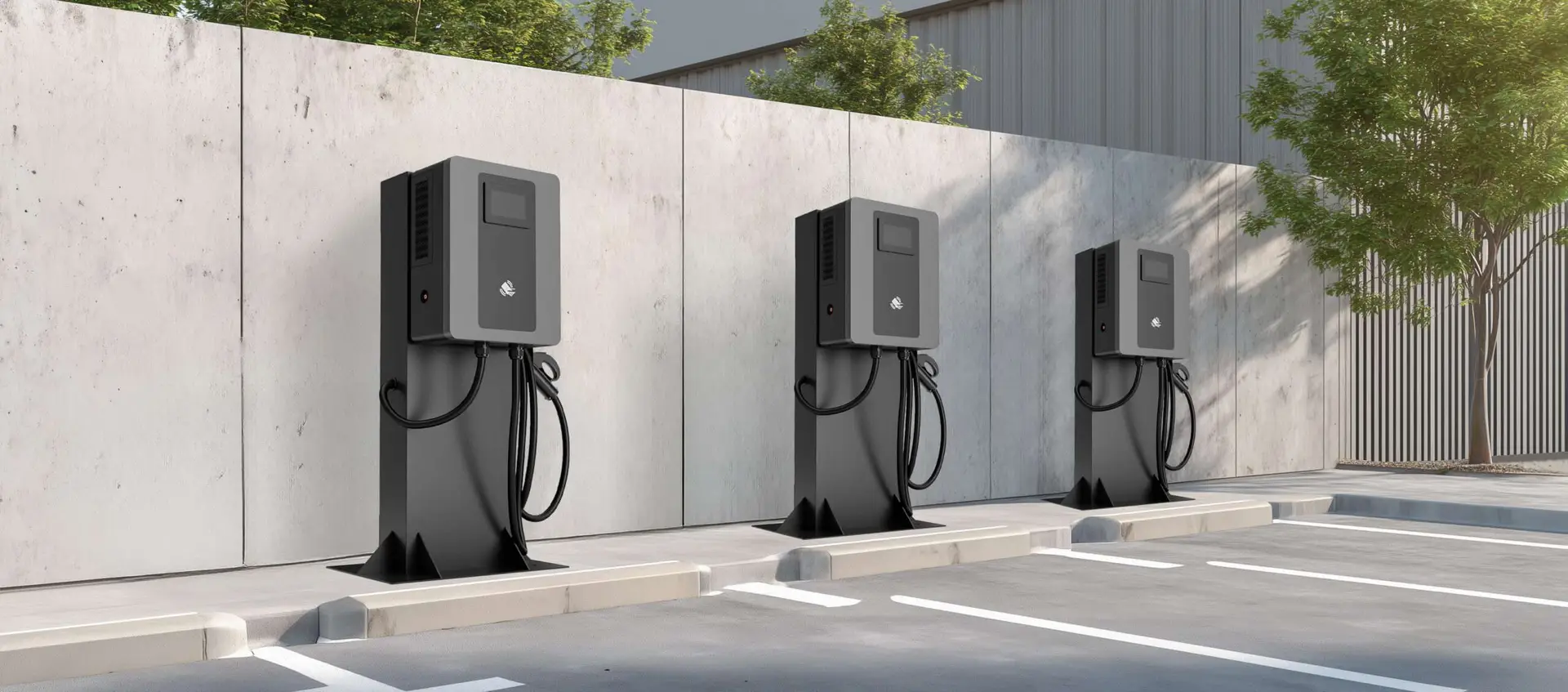
| Tight depot bays & vehicles with 11 kW OBC caps | MG-A11 compact DC | 20 / 30 kW DC; space-saving cabinet; IP54 & IK10; LAN connectivity | Delivers 2–3× the speed of an 11 kW onboard charger in garages and tight yards |
| Midday shift top-ups & larger trucks | MG-A10 / MG-A13 DC fast chargers | MG-A10: 20 / 30 / 40 kW DC · MG-A13: 60–240 kW dual-gun DC; >94% efficiency, power factor >0.99; OCPP | CCS2, CHAdeMO and GB/T options for mixed commercial fleets |
For the broader financial model behind workplace and commercial AC deployments, see our guide to the commercial EV charging business case, or check our EV charger FAQ for lead times, warranty terms and sample testing.
FAQ
Should a fleet depot use AC Level 2 or DC fast charging?
Most return-to-base depots use both: 1:1 AC Level 2 chargers (7–22 kW in Europe, 40–80 A in North America) for vehicles parked 8 to 12 hours overnight, plus a smaller shared pool of 20–40 kW or 60–240 kW DC fast chargers for midday shift top-ups, late arrivals and vehicles with small onboard AC chargers.
How many EV chargers does a 20-vehicle fleet depot need?
If all 20 vehicles park overnight and drive predictable daily routes, 20 AC Level 2 ports (or 10 dual-port AC pedestals) plus 1 or 2 shared 20–40 kW DC ports gives every vehicle a guaranteed morning charge and a backup fast bay without rotating vans during the night.
How do I avoid a utility transformer upgrade when installing fleet chargers?
Use OCPP smart charging or dynamic load balancing to cap the total power drawn by all chargers at once. Because overnight vehicles stay parked for 8 to 12 hours, spreading the load across the full night often cuts peak kilowatt demand by 30% to 50% compared with unmanaged charging.
Why would a fleet choose a 20–30 kW DC charger over a 22 kW AC wallbox?
Many electric vans and trucks have an 11 kW onboard AC charger limit, meaning they can only draw 11 kW even from a 22 kW AC wallbox. A 20 kW or 30 kW compact DC charger bypasses the onboard charger and feeds the battery directly, cutting charging time in half without the cost and grid footprint of a 150 kW DC cabinet.
Key takeaways
- Size fleet depot EV charging from worst-case daily kilowatt-hours and net usable dwell hours, not battery size alone.
- Overnight stays of 8 to 12 hours favour 1:1 AC Level 2 wallboxes (7–22 kW EU, 40–80 A NA), which cost less to buy, install and power than all-DC yards.
- Check your vehicles’ onboard AC charger limit: where vans cap AC intake at 11 kW, a 20–30 kW compact DC unit doubles charging speed in tight windows.
- Pair overnight AC bays with a shared 20–40 kW or 60–240 kW DC pool (roughly 1 DC port per 8–12 vehicles) for shift handovers and late routes.
- Use OCPP load management to stagger overnight sessions and stay within your existing building transformer capacity.
Planning a depot rollout? Share your vehicle count, daily route mileage and available site power—request factory pricing and our engineers will suggest an AC and DC layout for your market.
Sources
- US DOE Alternative Fuels Data Center: Developing infrastructure to charge electric vehicles
- IEA, Global EV Outlook 2025: Electric vehicle charging
- Directive (EU) 2024/1275 on the energy performance of buildings (Article 14)
- US EPA: ENERGY STAR EV chargers
- Open Charge Alliance: Open Charge Point Protocol (OCPP)