If you are choosing between OCPP 1.6J and 2.0.1, here is the short answer. For most commercial sites, an OCPP 1.6J charger still works with almost every charging platform on the market. OCPP 2.0.1 matters when you need stronger security, finer device management, Plug & Charge or compliance with public funding rules. This guide compares OCPP 1.6J vs 2.0.1 from a buyer’s point of view and ends with the questions to ask before you order.
What OCPP does, in one minute
The Open Charge Point Protocol (OCPP) is the language a charger uses to talk to its management platform, often called a CSMS or back end. Because it is an open standard maintained by the Open Charge Alliance, you can run chargers from one manufacturer on software from another, and change either side later without starting over.
The “J” in OCPP 1.6J stands for JSON over WebSocket, the version in use today. An older variant, 1.6S, used SOAP and is now rarely supported, so always confirm which one a supplier means when they say “OCPP 1.6”.
The short answer: which version should you buy?
| Your situation | What to choose |
|---|---|
| Private sites (apartments, offices, fleet depots) on a platform that runs OCPP 1.6J | 1.6J is fine, as long as the charger has a proven upgrade path to 2.0.1 |
| New network, and your platform already supports 2.0.1 | Choose 2.0.1 from day one |
| US projects funded under federal rules (23 CFR 680, including NEVI) | 2.0.1 is required |
| You need Plug & Charge, large-scale remote management or stricter security | 2.0.1 |
OCPP 1.6J vs 2.0.1: 7 differences that affect your purchase
OCPP 2.0.1 is not just 1.6 with a few extra messages. It reorganises how a charger describes itself, handles transactions and manages security. The two versions are not compatible at message level, so the charger and the platform must run the same version.
| Area | OCPP 1.6J | OCPP 2.0.1 | What it means for you |
|---|---|---|---|
| Compatibility | Widely supported by platforms | Not compatible with 1.6 at message level | Check which version your platform runs before you order |
| Security | Security profiles added later in a separate whitepaper | Security profiles and certificate management built into the protocol | Ask which security profile the charger supports |
| Device management | Flat list of configuration keys | Device Model: each component and its settings reported separately | Faster remote diagnosis on large or multi-connector sites |
| Transactions | Separate start and stop messages | One TransactionEvent flow with richer data | Easier pre-authorisation and more flexible billing |
| Smart charging | Basic charging profiles | More detailed profiles, priorities and external limits | Better load management where site power is limited |
| Plug & Charge | Not supported natively | Supports the ISO 15118 certificate flow | Drivers start charging by plugging in, if car, charger and platform all support it |
| Display and diagnostics | Limited | Remote display messages and detailed monitoring | Fewer site visits for routine issues |
Can an OCPP 1.6J charger be upgraded to 2.0.1?
Sometimes, but it depends on the hardware. OCPP 2.0.1 needs more memory, certificate storage for security and, for Plug & Charge, communication hardware that supports ISO 15118. A charger built only for 1.6J may not be able to take the new firmware. Before you buy a 1.6J charger with an “upgrade path”, ask three questions:
- Is the upgrade delivered over the air, or does the unit need to go back to the factory?
- Is the 2.0.1 firmware available now and already running in the field, or is it on a roadmap?
- Which 2.0.1 features need extra hardware, for example Plug & Charge?
Security: what to ask beyond “is it encrypted?”
OCPP defines three security profiles. In 1.6J they come from a later security whitepaper; in 2.0.1 they are part of the protocol itself. The right level depends on your network and your customers’ requirements.
| Profile | How the charger proves who it is | Connection |
|---|---|---|
| 1 | Username and password | Not encrypted, so only for closed networks |
| 2 | Username and password | Encrypted with TLS |
| 3 | Digital certificates on both sides | Encrypted with TLS |
Ask your supplier which profile the charger supports out of the box, whether it can be configured to the profile your platform requires, and how certificates are installed and renewed.
Where OCPP 2.0.1 is required or expected
- United States: charging projects funded under 23 CFR 680.108 (including the NEVI program) must use chargers that conform to OCPP 2.0.1 and support ISO 15118-2 with Plug & Charge.
- International standard: OCPP 2.0.1 was adopted by the IEC as international standard IEC 63584 in 2024, according to the Open Charge Alliance.
- European Union: the revised Energy Performance of Buildings Directive requires recharging points installed under its building rules to be capable of smart recharging. It does not name an OCPP version, but a networked, managed charger is the practical way to meet that expectation.
What about OCPP 2.1?
The Open Charge Alliance released OCPP 2.1 on 23 January 2025. It builds on 2.0.1, adding features such as bidirectional charging and better energy management, and is designed so that application logic written for 2.0.1 keeps working. OCPP 1.6 is not compatible with 2.1. For buyers, that means a charger and platform on 2.0.1 are the natural stepping stone to 2.1, while a move straight from 1.6 still means a new integration.
Buyer’s checklist: 8 questions for your supplier
| Question | Why it matters |
|---|---|
| Is it OCPP 1.6J or 1.6S? | 1.6S is outdated and rarely supported by platforms |
| Which 1.6 feature profiles are supported: Core, Smart Charging, Firmware Management, Local Auth List, Reservation, Remote Trigger? | Two “OCPP 1.6J” chargers can offer very different functions |
| Is OCPP 2.0.1 available now, and how is it delivered? | Over-the-air firmware that is already in the field is lower risk than a roadmap |
| Which security profile is supported, and can it be configured? | Your platform or customer may require Profile 2 or 3 |
| Is ISO 15118 Plug & Charge available, and does it need extra hardware? | Needed for US federal funding and for a smoother driver experience |
| Has the charger been tested with your platform? | Avoids surprises during commissioning |
| Can you send a sample unit for integration testing? | Lets your team verify messages before a volume order |
| How are firmware updates delivered and supported? | Determines long-term maintenance cost |
How MAXGREEN handles OCPP
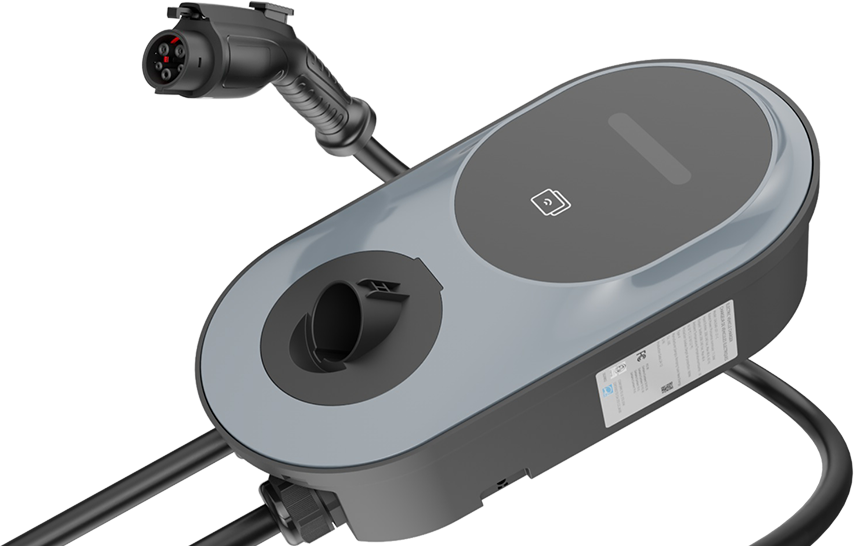
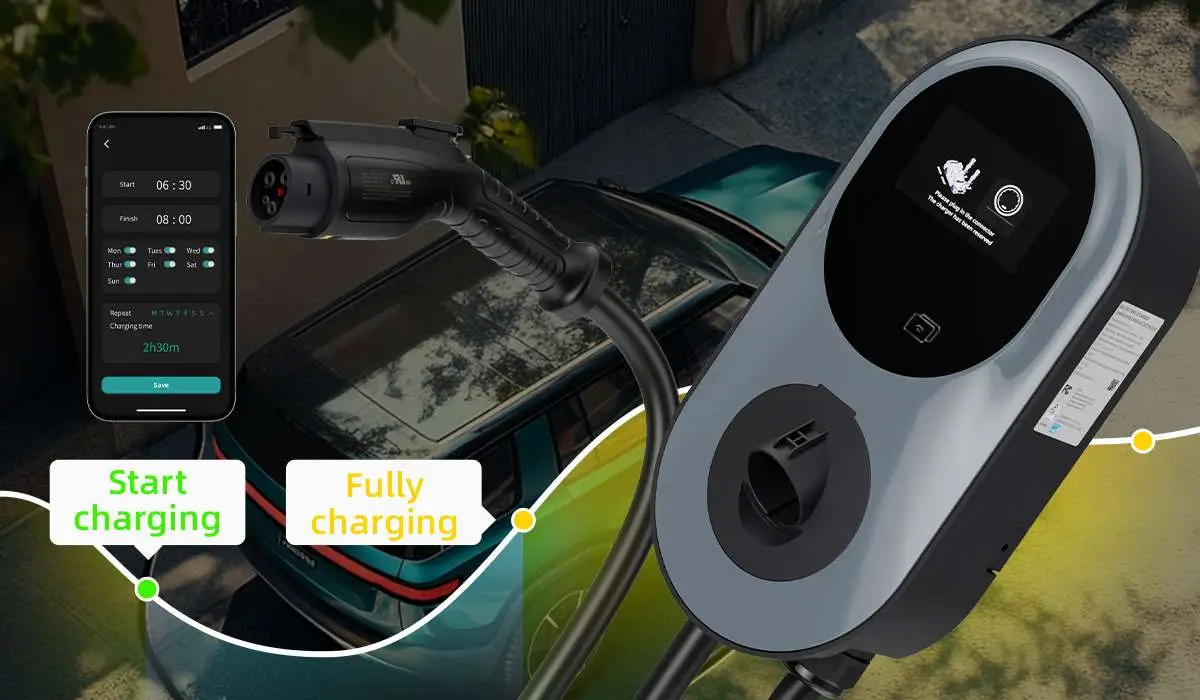
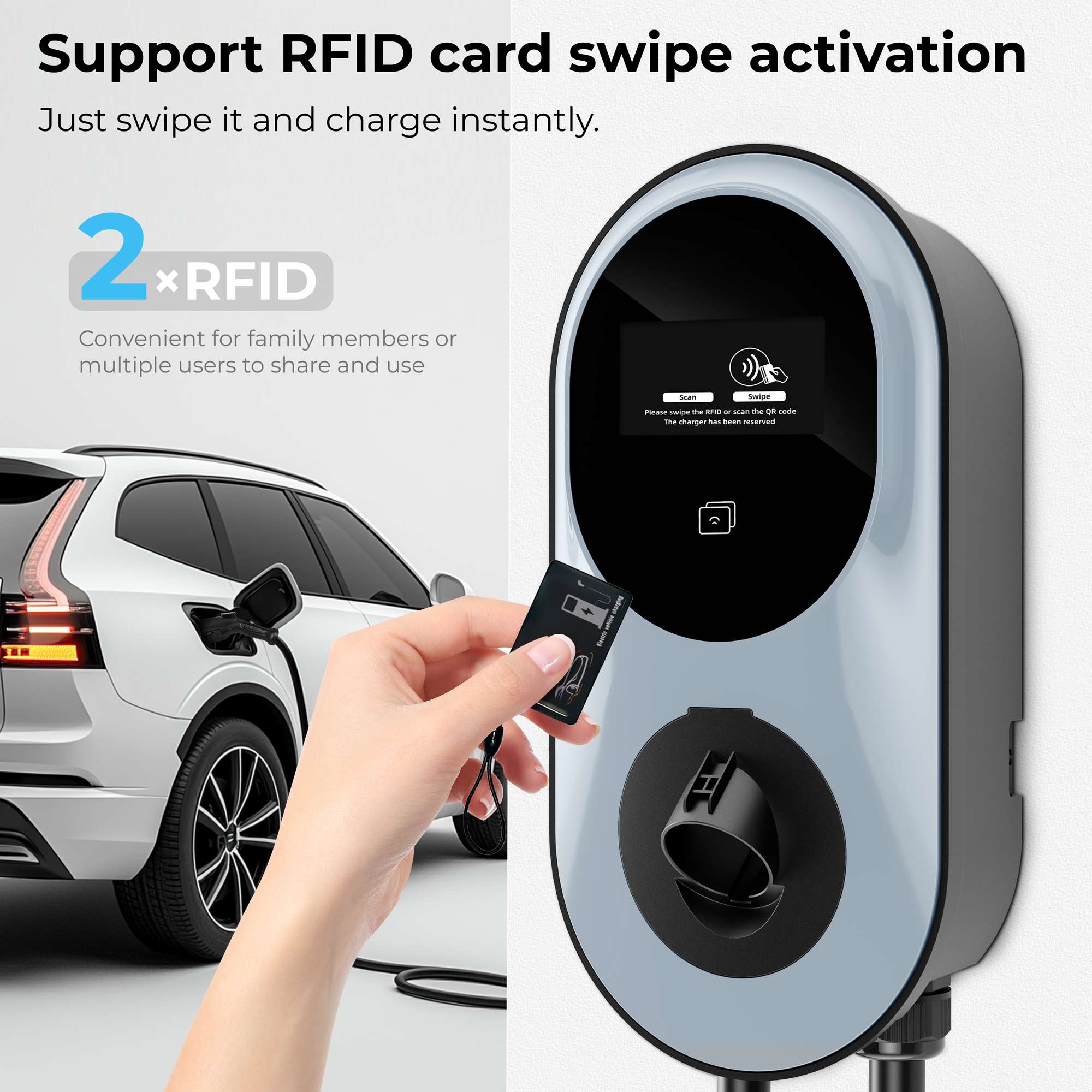
Our networked wallboxes support OCPP 1.6J. The MG-L01 smart wallbox and the MG-A09 in our smart AC wallbox range also run OCPP 2.0.1: the firmware is delivered over the air, has completed testing and is already in use in the market. The MG-A09 offers ISO 15118 Plug & Charge as an option.
Security profiles and platform integration can be configured to your requirements. We can send a sample unit for testing, or our development team can run the integration test with your platform before rollout. For the commercial case behind networked charging, see our guide to the commercial EV charging business case, and for quick answers, our EV charger FAQ.
FAQ
Is OCPP 1.6J outdated?
No. It is still the most widely supported version and works well for many private and commercial sites. Choose a charger with a confirmed path to 2.0.1 so you are not locked in.
Can OCPP 1.6J and 2.0.1 chargers run on the same platform?
Yes, if the platform supports both versions. Each charger connects using one version at a time, so check that your platform handles both before mixing them on one network.
Does OCPP 2.0.1 make Plug & Charge work automatically?
No. Plug & Charge needs ISO 15118 support in the charger, the vehicle and the platform, plus the right certificates. OCPP 2.0.1 provides the messages that carry this process between charger and platform.
Is OCPP 2.1 backward compatible?
With 2.0.1, largely yes: the Open Charge Alliance designed it so that 2.0.1 application logic keeps working. It is not compatible with OCPP 1.6.
Key takeaways
- OCPP 1.6J is still enough for many sites, as long as the charger can move to 2.0.1.
- OCPP 1.6J vs 2.0.1 are not compatible at message level: match the charger to your platform.
- 2.0.1 adds built-in security, a detailed device model, flexible transactions and Plug & Charge support.
- US federally funded projects require OCPP 2.0.1 and ISO 15118.
- Ask for proof that 2.0.1 firmware is available now, and test with your platform first.
Planning a networked rollout? Request factory pricing and tell us your platform and market.